
Even though in our secular world the fear of heavenly punishments for non-observance of fasting commandments is on the wane, people in Central Carinthia take Lent seriously and consciously forgo one or two indulgences. This makes Easter week all the more sumptuous in terms of culinary delights and living traditions. We present 8 facets of Easter in Central Carinthia.
Our tip: Experience Easter in Central Carinthia in all its facets!
We have put together a special package for you, with which you can get to the bottom of the special atmosphere of Easter in the historic heart of Carinthia.
- Arrival: Maundy Thursday, March 28, 2024
- Departure: Easter Sunday, March 31, 2024
- 3 nights at St. Georgen am Längsee Abbey incl. half board
- Regional Easter basket with products from Marktplatz Mittelkärnten
- Visit to the traditional meat consecration in St. Georgen Abbey
- Participation in the torch carrying in Gösseling on Easter Saturday
Price: 310 Euro
Book now and experience Easter in Central Carinthia!
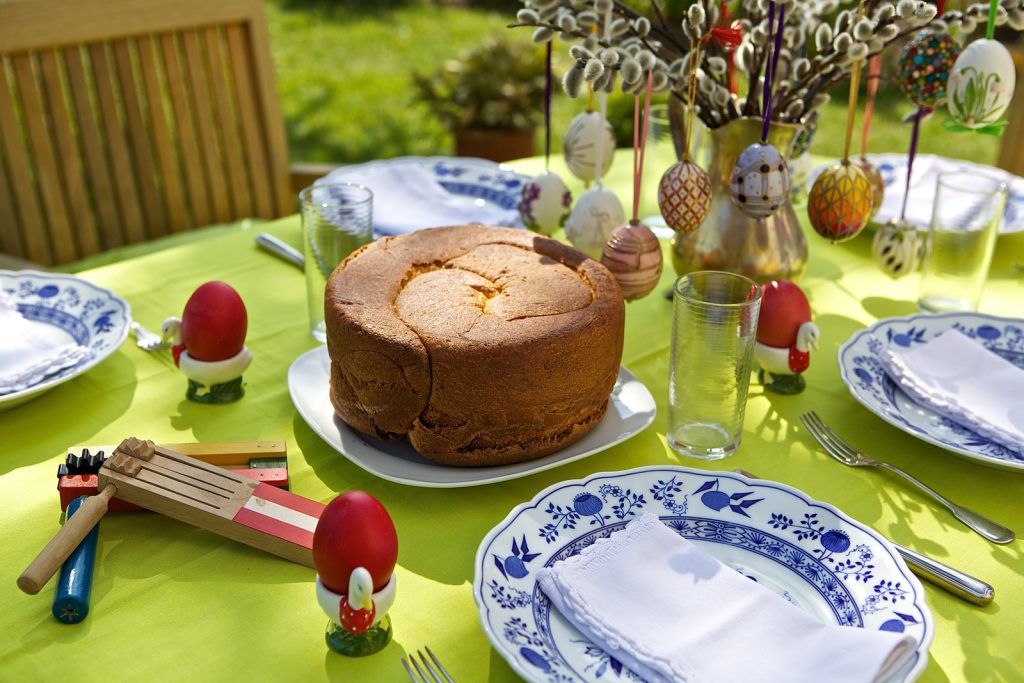
1. the Reindling as a sweet foundation
Made from yeast dough, Napfkuchen is an integral part of the Carinthian table, especially at Easter. As is so often the case, many people rely on the family’s own secret recipe, which is passed down from generation to generation and therefore more or less inherited. Whether unfilled or with raisins and/or nuts, in the classic Reindling shape or as an Easter pinze: the shapes of the sweet base could not be more varied. Another special feature is that the Carinthian palate combines sweet with savory at Easter. A bite of ham with horseradish is often followed by a piece of Easter beef – or vice versa. Easter fusion cuisine in Carinthian: a combination that, with the exception of many a church day, is otherwise unthinkable all year round.
2. the egg – in all colors and shapes
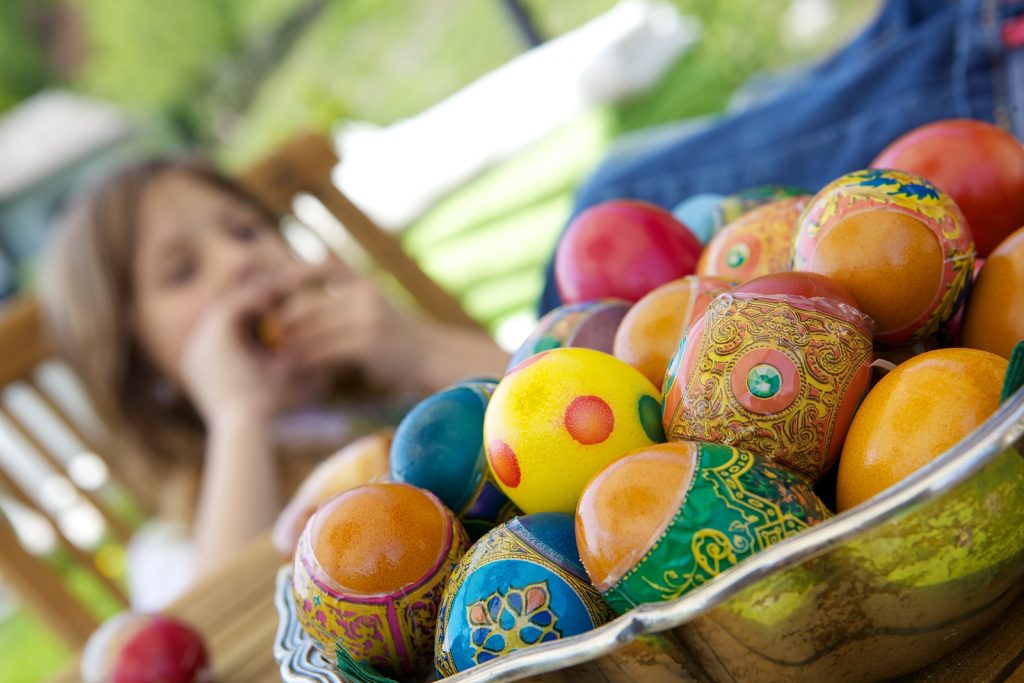
Eggs play a major role at Easter throughout the region. In Central Carinthia, however, they become the superstars of Easter week in several different forms. Whether hard-boiled and brightly colored or in a team with horseradish, vinegar, oil, salt and pepper as egg horseradish: everything revolves around the egg. The Eierkren, enjoyed in combination with Easter beef, ham and co is practically Easter snack in its highest form.
3rd endurance test for those sensitive to spiciness – horseradish
Freshly grated horseradish (or horseradish) is a must at the Easter snack table. It is the spicy companion and completes the unique flavor combination together with sweet white bread and spicy smoked meat, as it is only available at Easter. Horseradish is also a test of courage. A bite of grated horseradish in the mouth, remain as unimpressed as possible and block the lacrimal gland is the motto. The most insensitive wins the spiciness test.
4. in seventh ham heaven: the hearty core of the Easter snack
Smoked ham is the big player on the Easter lunch table. It is cooked in one piece and then served in slices that are not too thin. As already mentioned, Easter is also the only occasion when sweet and savory foods are practically eaten from the same plate.
5 A question of faith: the tongue
Opinions differ when it comes to this traditional ingredient of a Carinthian Easter snack: beef tongue. Sliced wafer-thin, many people enjoy this specialty almost exclusively at Easter. However, many also shy away from eating tongue because they don’t appreciate the feeling of eating something that has already played a major role in someone else’s chewing routine.
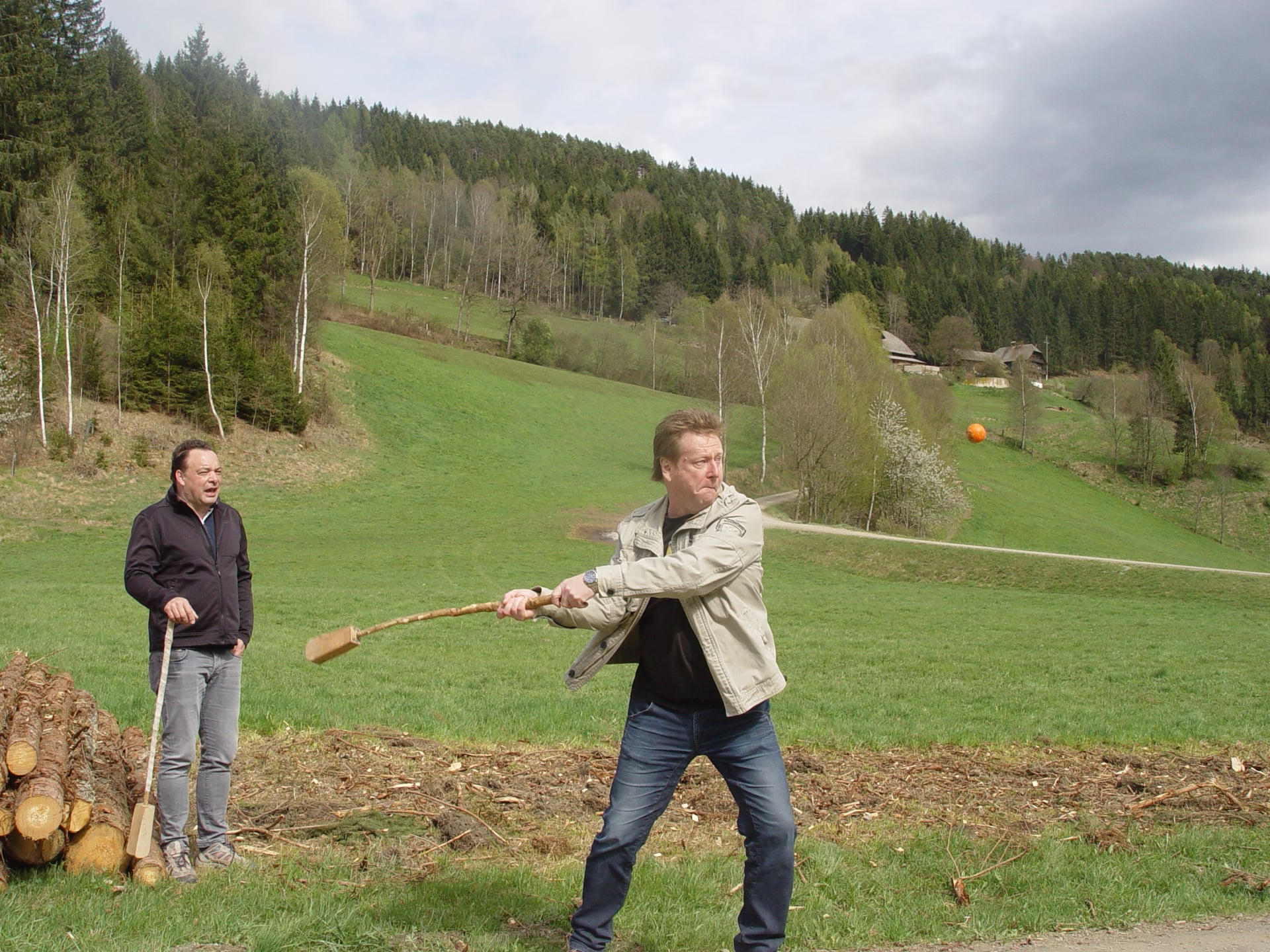
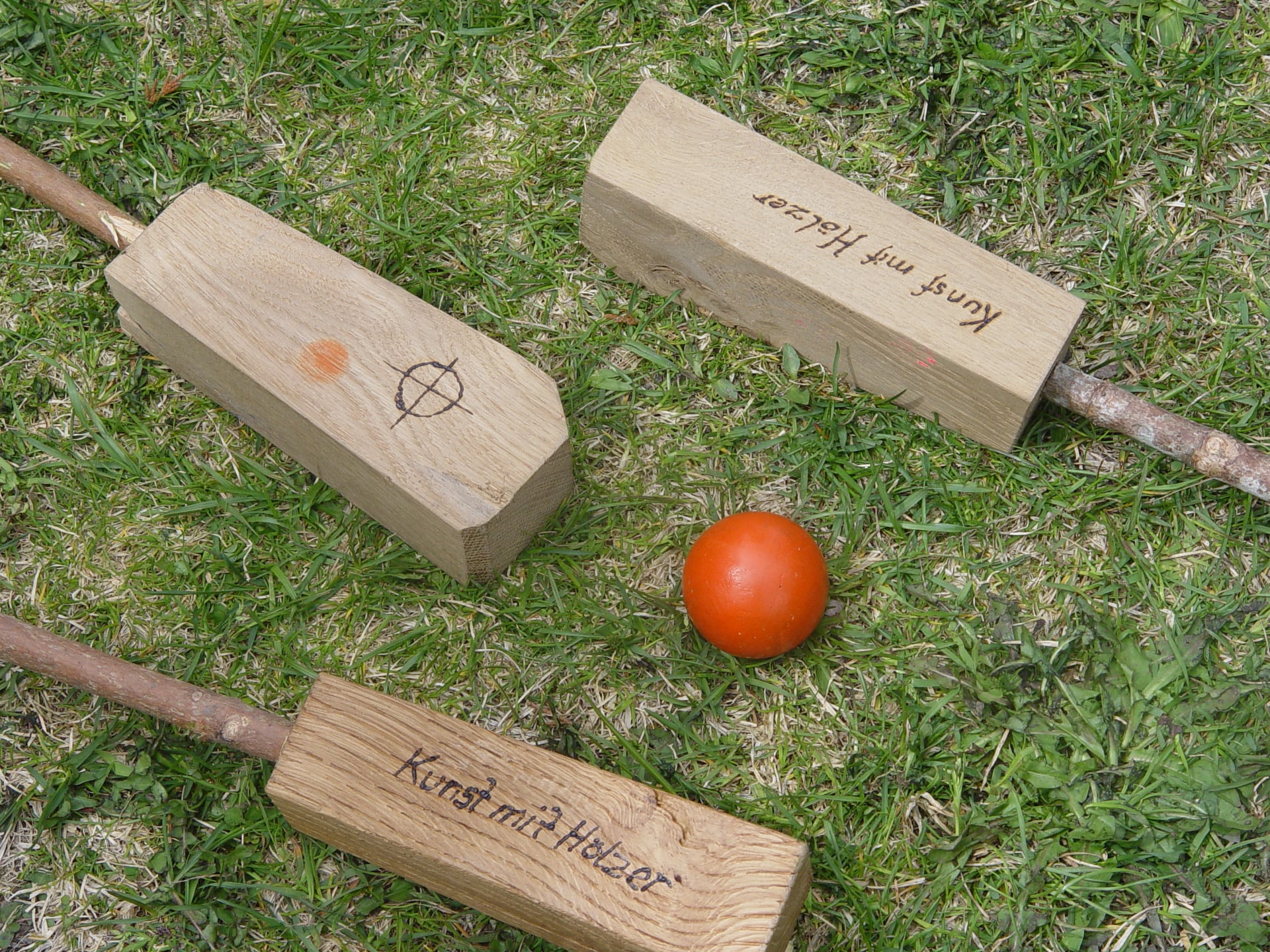
6. this is how the Celts played golf: Ball striking in Zweinitz
In Zweinitz in the Gurktal valley, a very special spectacle takes place every year on Easter Sunday: the so-called ball hitting. The main point of the game is to drive a wooden ball with a corresponding bat (the Kolm) to a target according to certain rules. The game is played in the open field, with the Zweinitz village sign traditionally serving as the target. After the Kugelschlager have to cover a few kilometers on their way to happiness, they are treated to culinary delights and brewed delicacies made from hops and malt along the way.
Ball striking is an original form of golf. The sport, in which a wooden ball was propelled with a club, already existed in ancient times in many different countries. At the time of Louis XIV, it was even one of the leisure activities reserved for the nobility in France. Even the Celts are said to have hurled handmade balls through the air with mallet-like tools. In a way, Easter Sunday in Zweinitz is a return to the tradition of a bygone era.
7. fiery customs
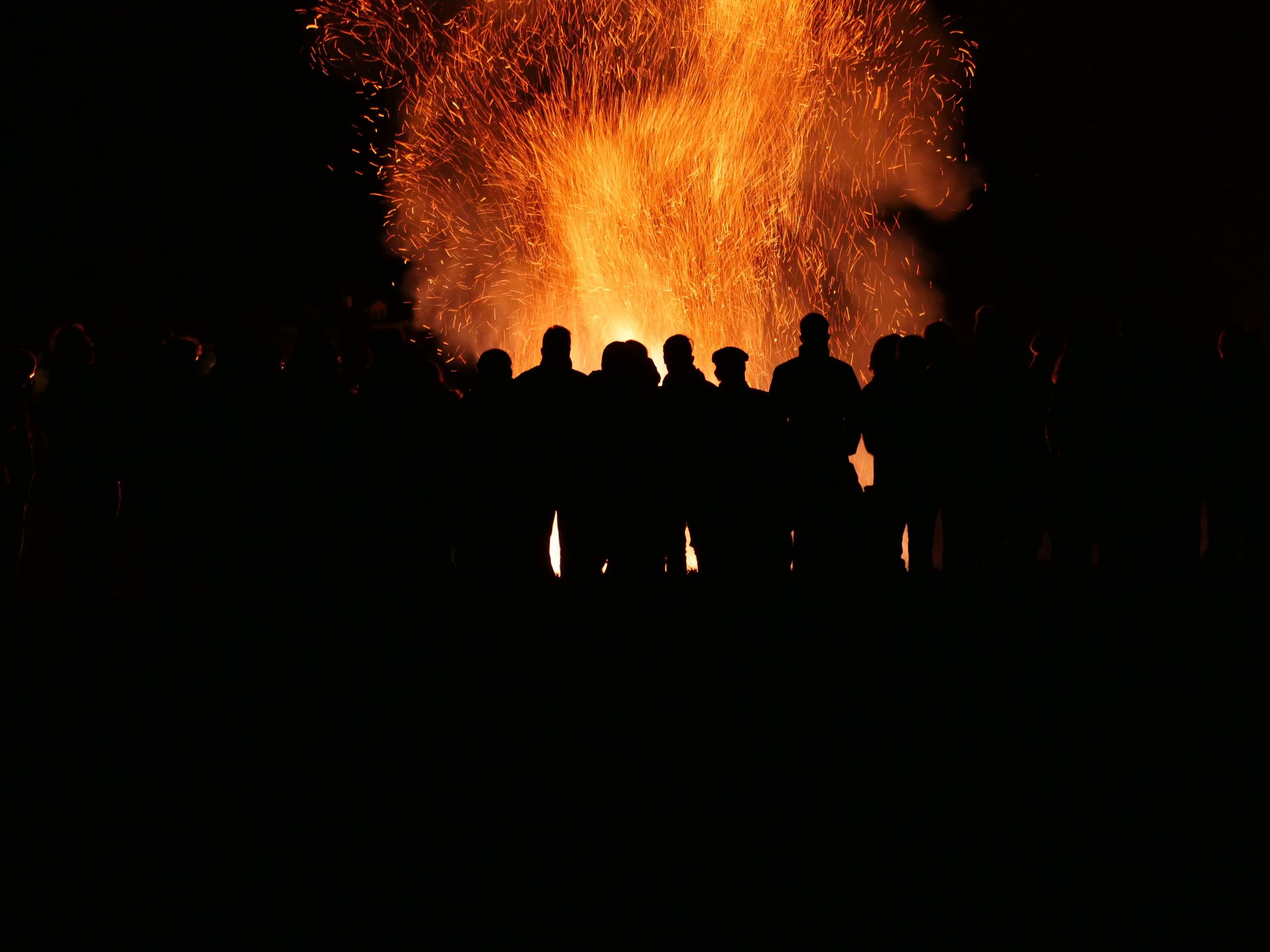
In Central Carinthia, the expected food coma does not set in on Easter Saturday after eating meat. Rather, the locals turn night into day with living customs. As you drive over the rolling hills, the Easter fires light up in almost every village. These are seen as a symbol of the resurrection of Jesus and the banishing of winter. Our tip: The best thing to do is to enjoy the small illuminated spots in the landscape from a hill and take in the spectacle.
Another custom that is particularly traditional in central Carinthia is to bring the fire home. To do this, people head to the church early in the morning on Holy Saturday, where the priest is already waiting to bless a burning pile of wood. Before that, however, tree sponges have to be collected in the forest. These are then held in the blazing flames until they start to burn. The tree sponges now serve as a medium for the “consecrated fire”, which was traditionally used to heat the stove at home. The blessing should be transferred to the food and the family.
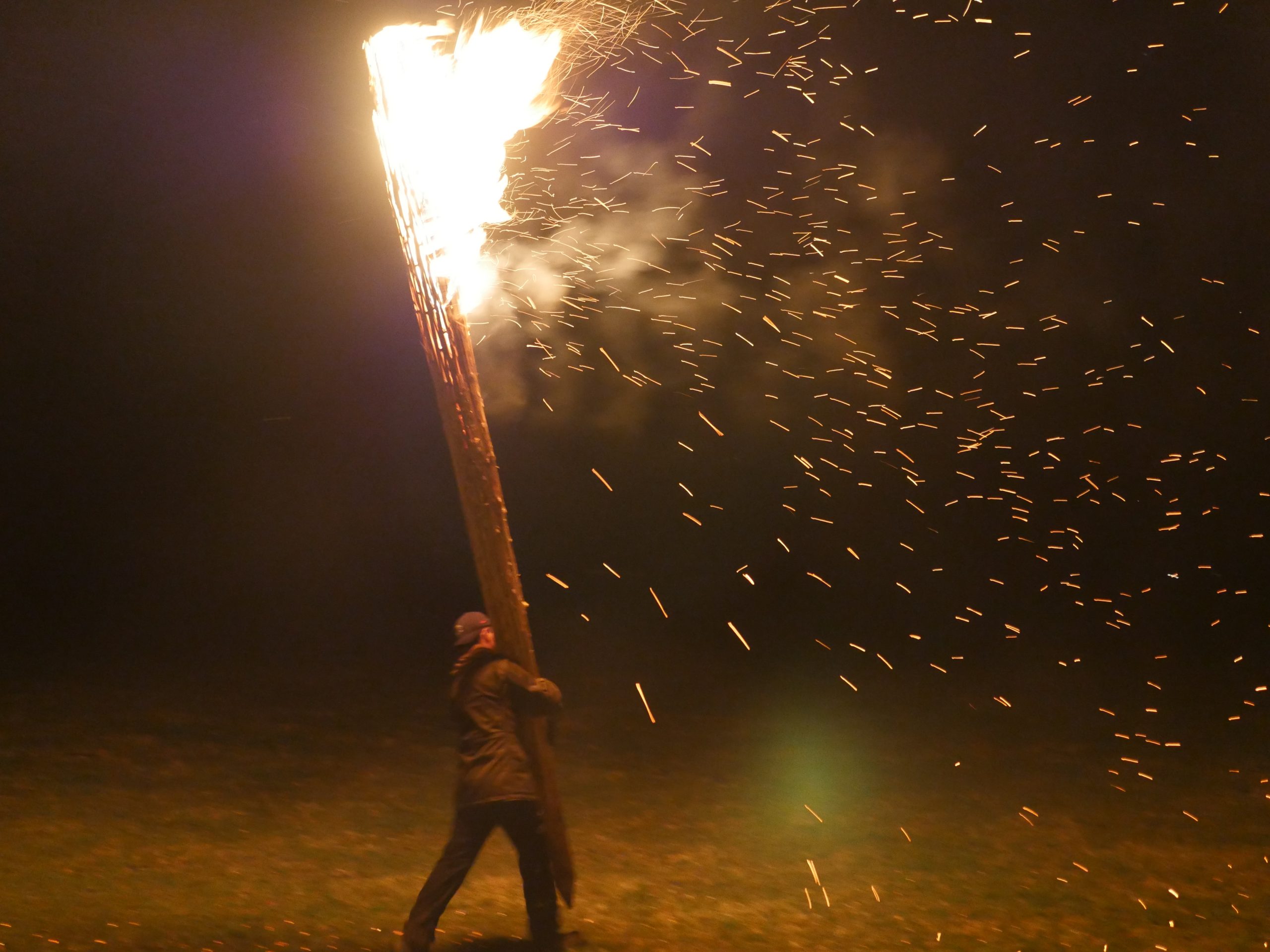
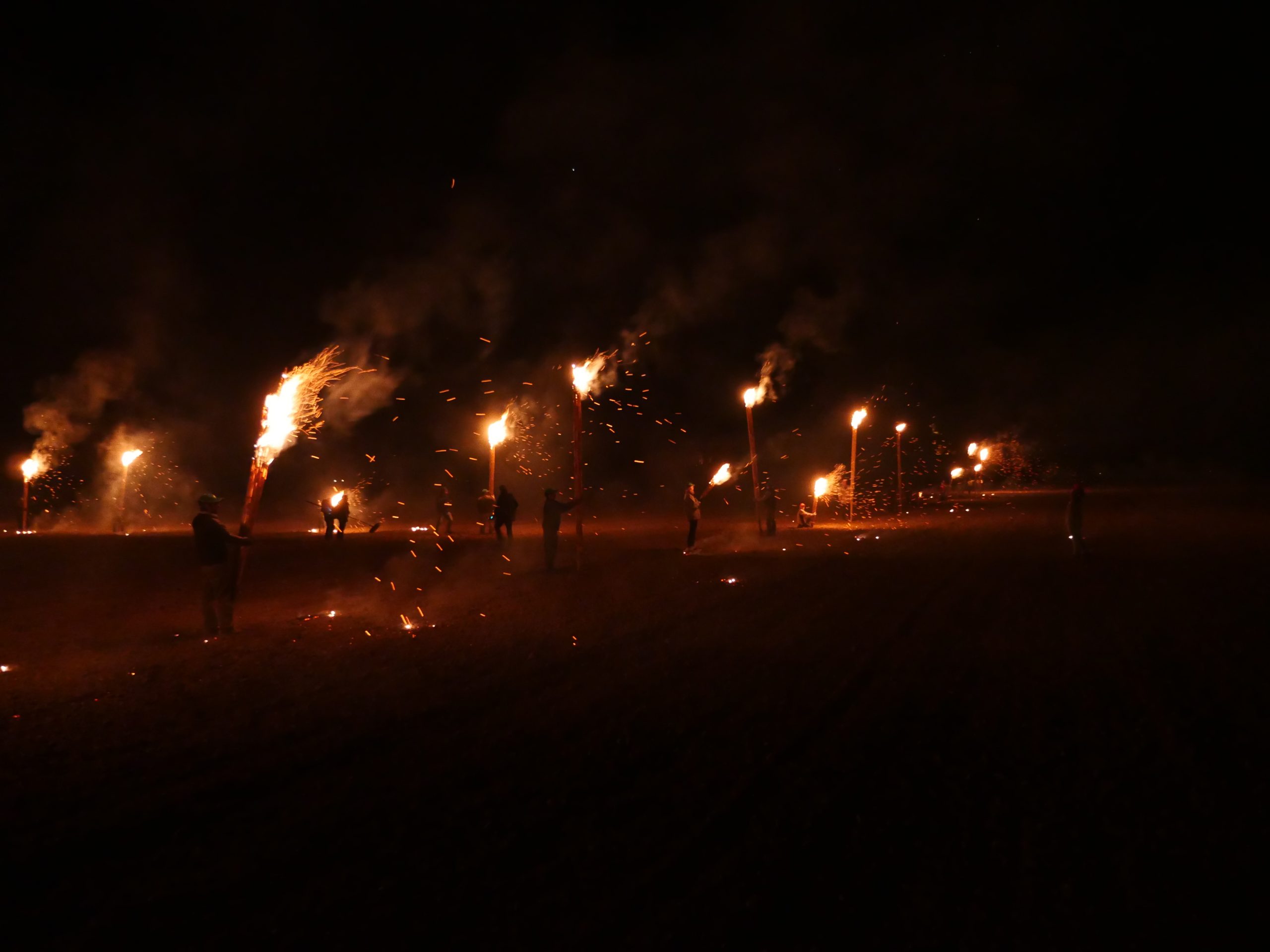
A special spectacle takes place in Gösseling in the municipality of St. Georgen am Längsee on Holy Saturday: The torch carrying. Men and women light meter-high logs and carry them through the dark Easter night. The torches, which can weigh up to 50 kilograms, are swung in a predetermined choreography and placed in circles or shapes. In this way, people ask for protection, safety and a good harvest.
Holy Saturday is therefore a “hotspot” of Easter customs in Central Carinthia in the truest sense of the word. In other communities in central Carinthia, people also seek protection from higher powers. In Guttaring, for example, there is the custom of dyeing eggs red on Maundy Thursday and throwing them over the barn and house on Holy Saturday. The rest that survives this procedure is stowed away in the roof gables and is said to offer protection from evil.
8 The blessing of food: a highlight of the church year
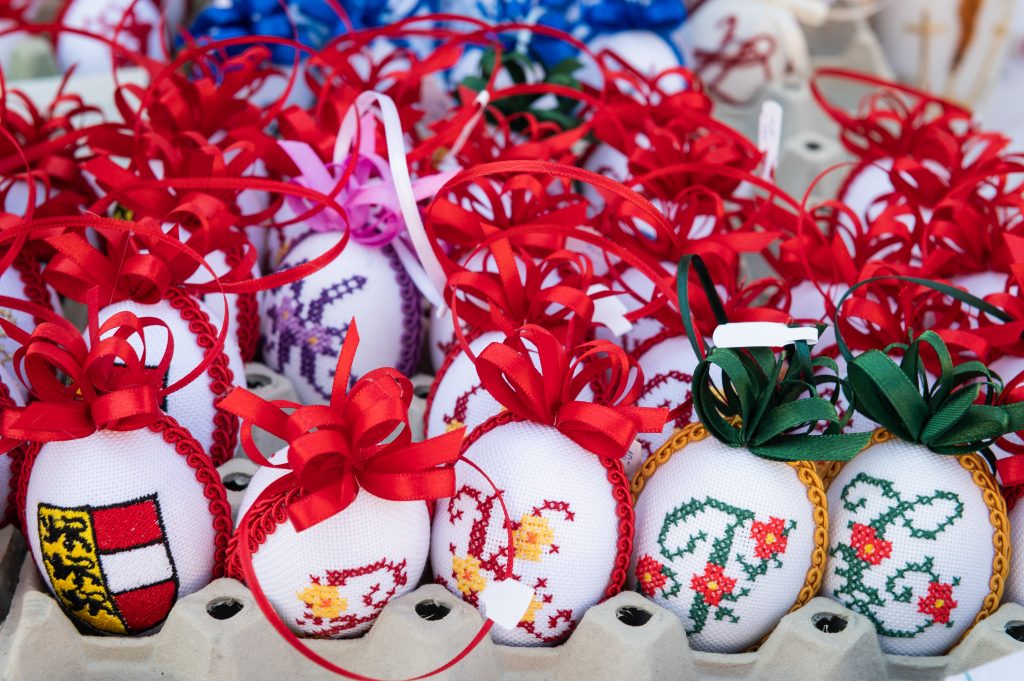
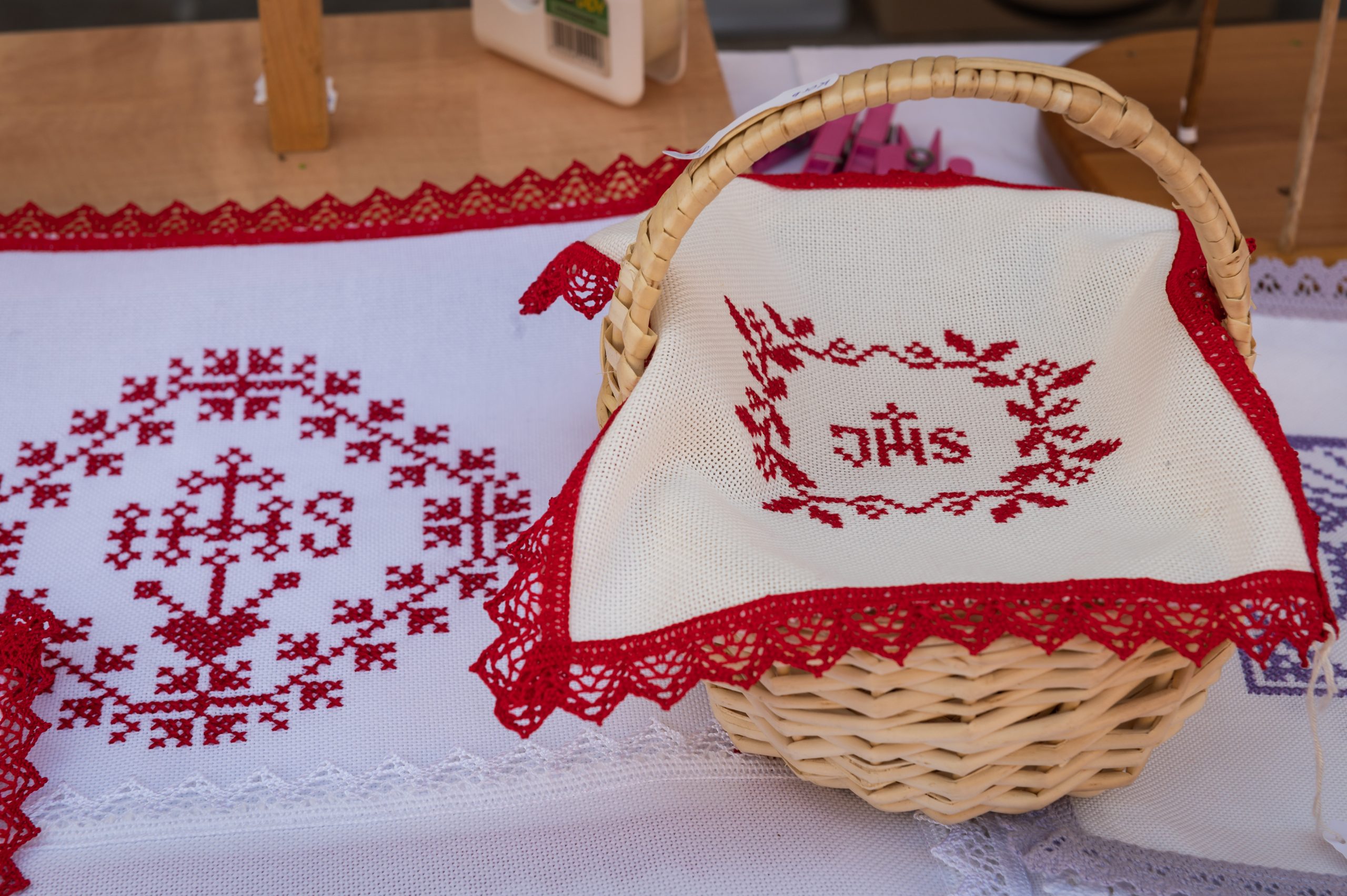
Many priests smile when they see more people than usual at the “top events” of the church year. Alongside Christmas, the blessing of food is an important occasion for many believers. The consecration baskets, which are decorated with elaborately embroidered consecration basket covers, are piled up in the sanctuary and blessed. They contain all the delicacies that we have already described in detail.
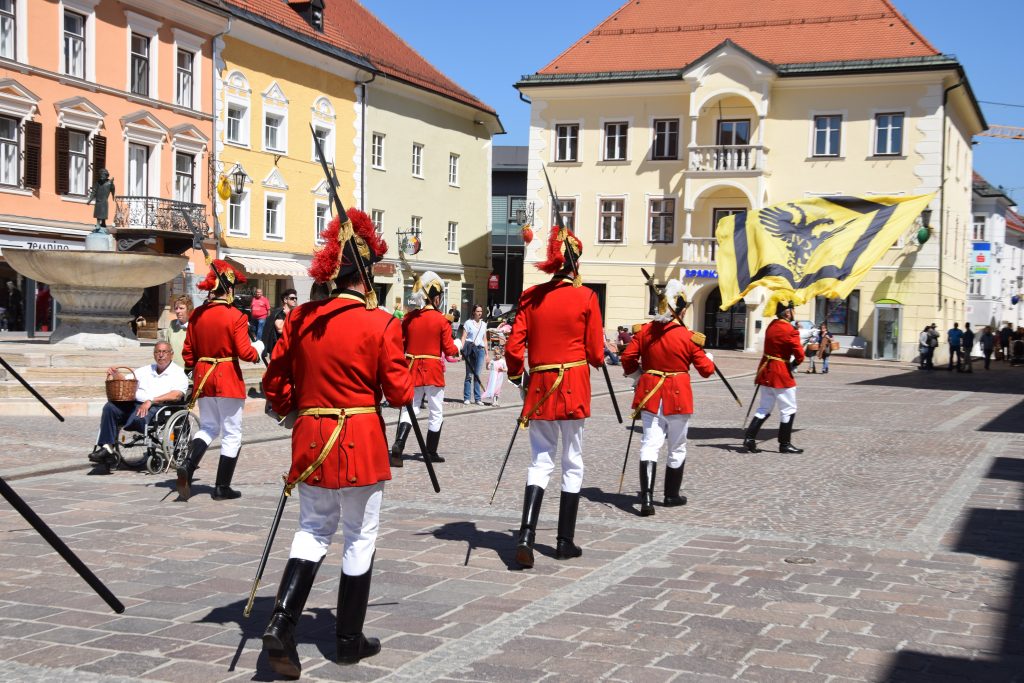
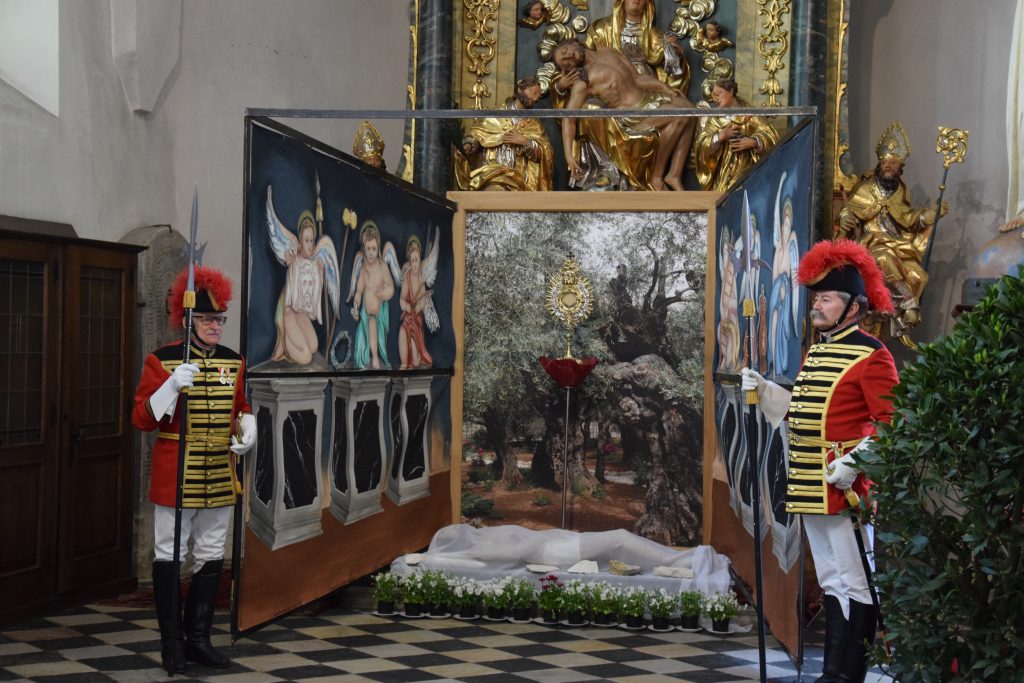
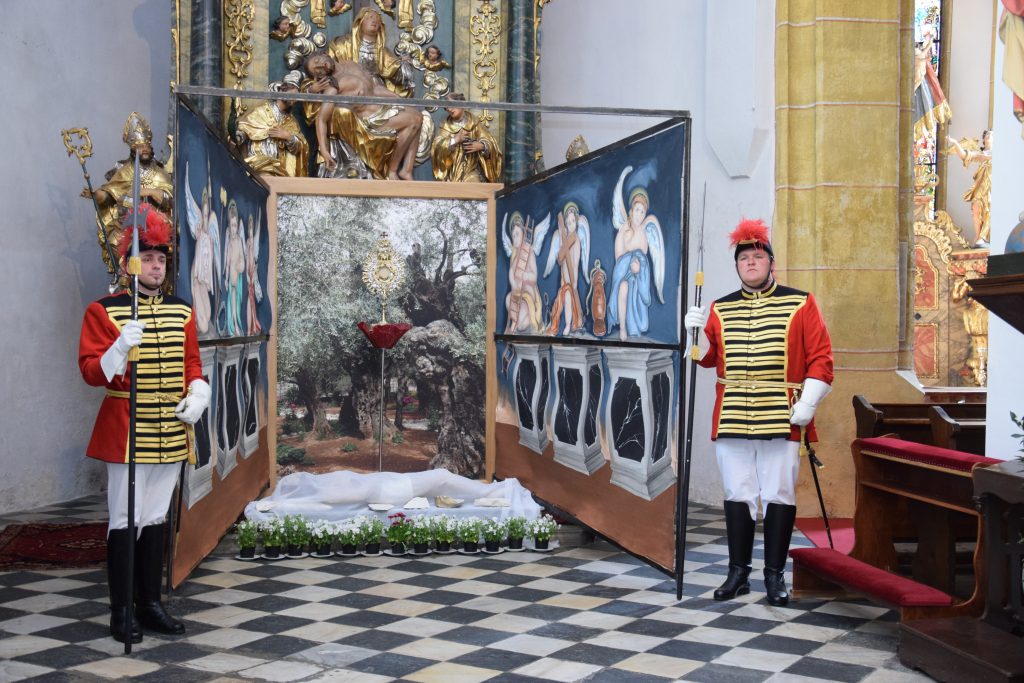
In the district town of St. Veit an der Glan, Easter is also unimaginable without the deployment of the Trabantengarde at the Holy Sepulchre. For centuries, they have been deployed on Holy Saturday to guard the monstrance in the parish church, the “Blessed Sacrament” so to speak, which is placed above the stylized tomb of Jesus Christ. This service, which always takes place during the blessing of the meal, lasts five hours. The changing of the guard in particular is a spectacle worth seeing.
Easter in Central Carinthia is a living tradition, peppered with regional specialties and culinary delights. Enjoy the burgeoning spring at the end of Lent with us in Central Carinthia!