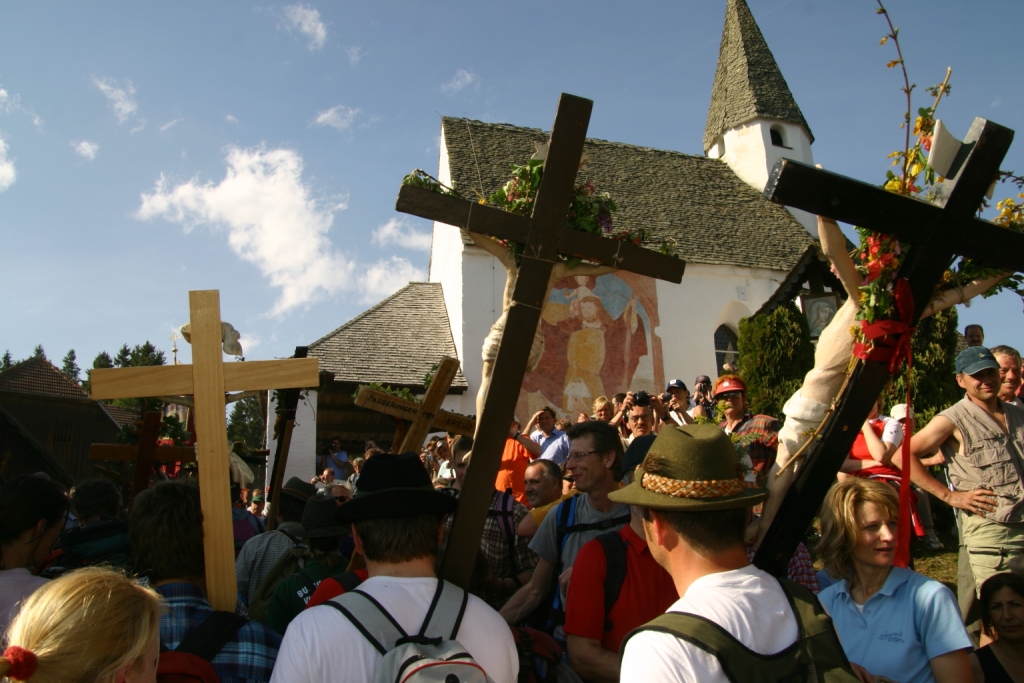
Four mountains run
Probably since Celtic times, but certainly since the late Middle Ages, the four holy mountains of Carinthia have been the destination of thousands of pilgrims every year. The “Vierbergler”, as these pilgrims are also known, meet on “Drei-Nagel-Freitag”, the second Friday after Easter, at Magdalensberg, where they set off at midnight. Their route leads over the Ulrichsberg to the Veitsberg and after around 16 hours and a good 50 kilometers they reach their destination, the Lorenziberg. In the past, the motives were religious, but today some participants focus on socializing and sporting activities. Secretly, however, all “Vierbergler” probably share the hope that their wishes and requests will be fulfilled. Those who take part in the Vierbergelauf at least seven times in a row are said to be guaranteed a place in paradise.
Tip: The four sacred mountains can be hiked in stages all year round on the “Vierberge-Weitwanderweg”.
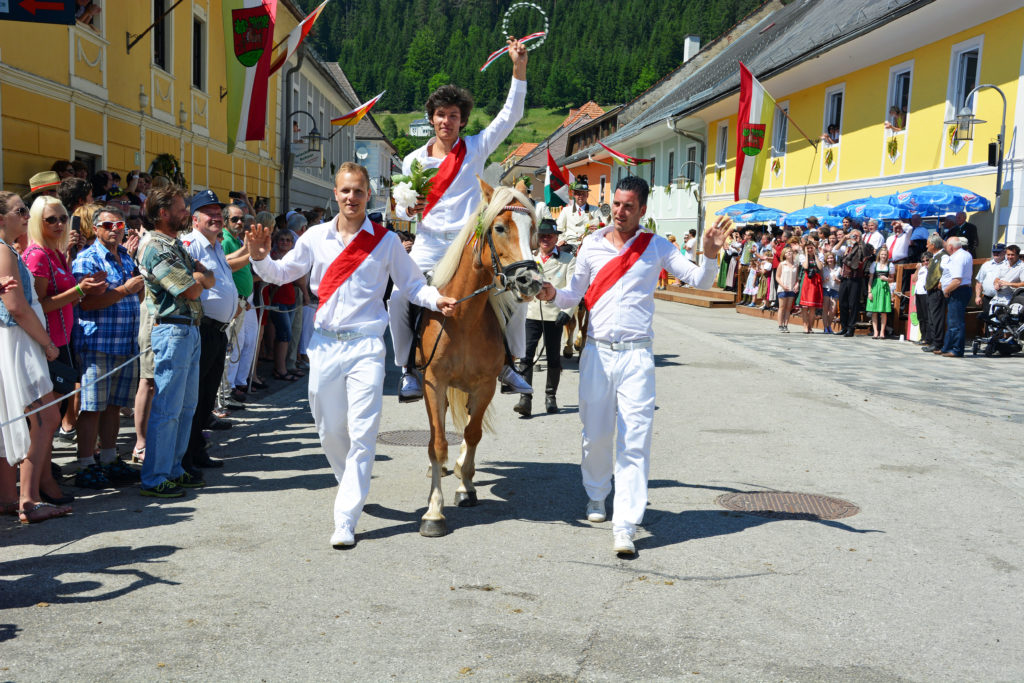
Wreath riding in Weitensfeld
In Weitensfeld in the Gurktal valley, a young man kisses a stone maiden every year on Whit Sunday. One of Carinthia’s most beautiful customs allegedly began with the “black death”. The legend tells the following story: When the plague, also known as the “black death”, ravaged the people of Weitensfeld in the 17th century, only the damsel from Thurnhof Castle and three sons of the burghers remained alive. The maiden challenged the three boys to a race, the winner was allowed to kiss and marry the maiden. In memory of this event, the unique custom of the Kranzelreitens was born, which must never end, otherwise great misfortune would befall the village. Every 25 years, a real “May bride” receives the myrtle wreath and the winner’s kiss instead of the stone maiden.
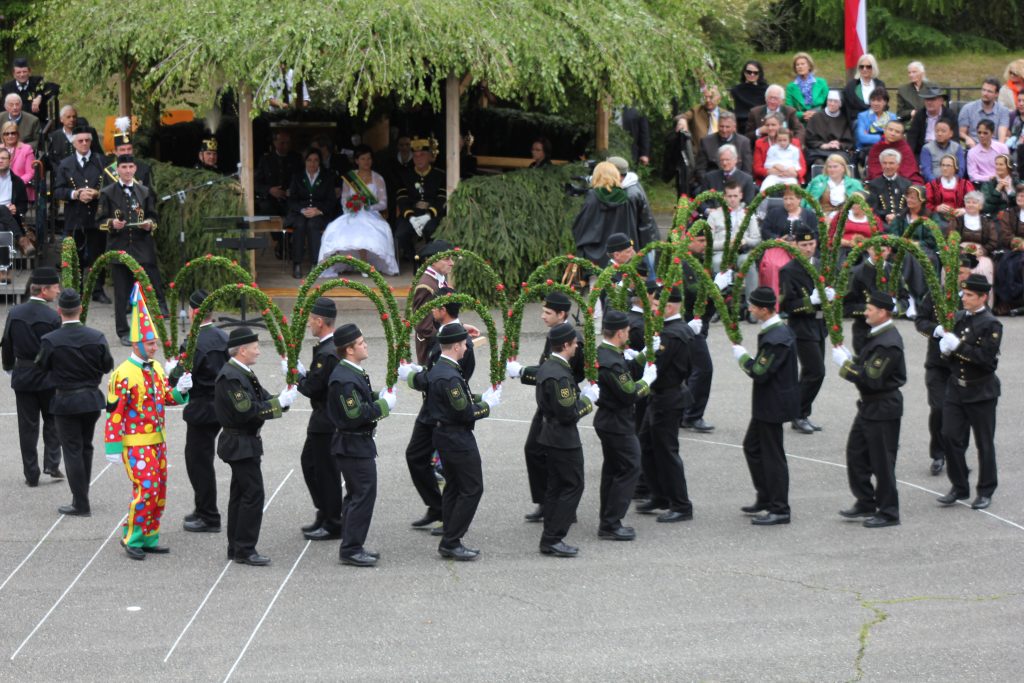
Hüttenberg ripening dance
Norian iron from the area around Hüttenberg was considered a symbol of hardness and durability in ancient Rome. Until the 19th century, mining stimulated the economy of the entire region. Every three years, on the Sunday after Whitsun, Hüttenberg is the scene of an old mining tradition. Austria’s most impressive miners’ festival, the Hüttenberger Reiftanz, with Europe’s oldest surviving men’s chain dance, shows the importance that mining had for the region. The name “Reiftanz” comes from the leaf-covered, arched dance hoops. These are used to form various elaborate figures that symbolize scenes from the life of a miner. Fun and entertainment are provided by the “Hans Obermoar” and the “Schwoafträger”. The “Reiftanzbraut” in a white dress, accompanied by the mining commissioner, also plays an important role. During the so-called “Pritschen”, the guests of honor are placed on a bench for the amusement of the spectators. The Obermoar gives them three blows with his plank, which is supposed to bring good luck and health. The “Pritschen” lasts until the next day, “Pritschenmontag”, which is an official holiday in Hüttenberg.
Next Reiftanz performance: June 12, 2022
Dance of death in Metnitz
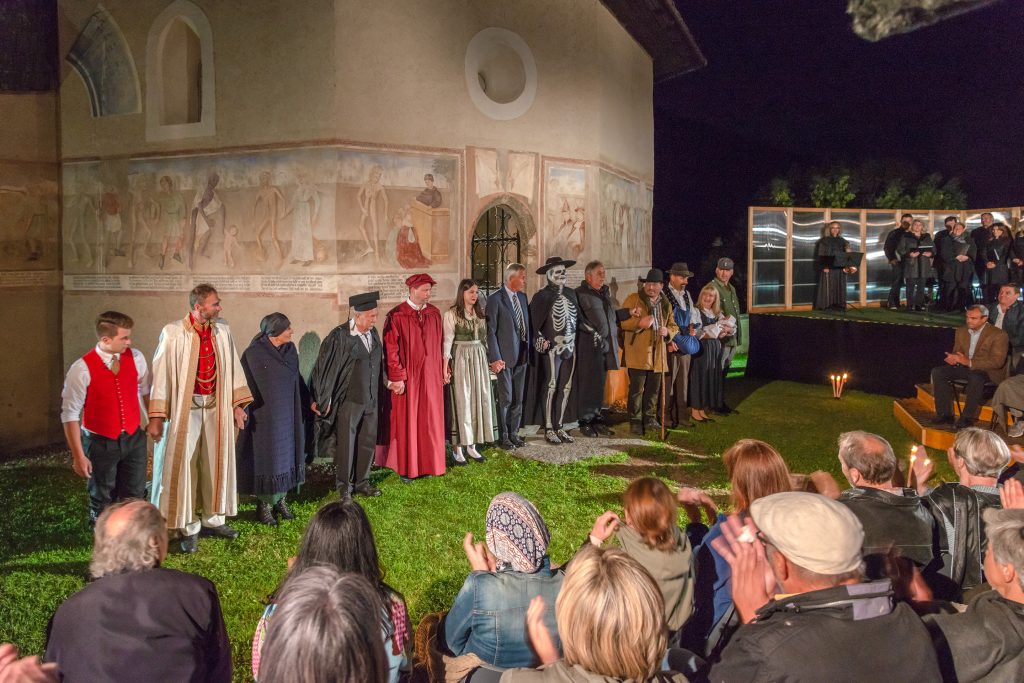
“Up, up, O man, get ready, …” Dance of death performances originated from liturgical games, which were common in many places towards the end of the Middle Ages. This impressive intangible cultural asset has been preserved in Metnitz. The ancient folk play is a reminder of the equality of all people before death, which knows neither class nor age.
The play takes place every four years at the end of July and beginning of August. All the actors, choristers and musicians are local and the roles of the characters have been passed down through the families for several generations. The venue is the charnel house by the church. It gets gruesome when death emerges from the darkness of the Karnertor, showing its many “faces” and sometimes taking its victims in a mild tone, sometimes mercilessly.
St. Veit Meadow Market
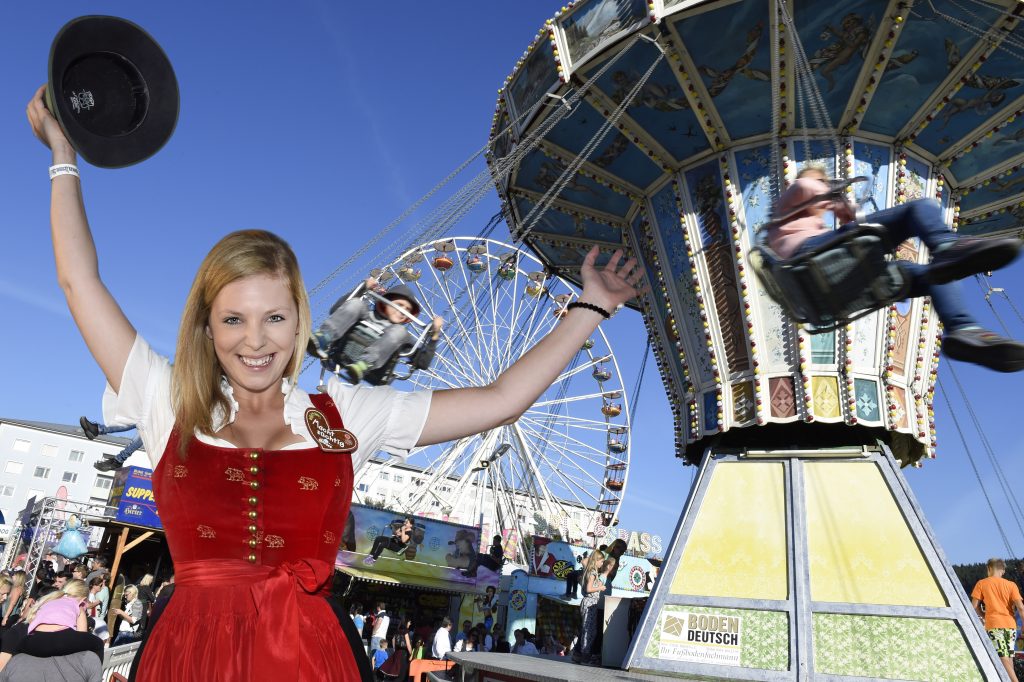
Carinthia’s largest and oldest market is the Wiesenmarkt in St. Veit. In 1362, Duke Rudolf IV of Habsburg granted the town of St. Veit the “perpetual right” to hold a market. Originally it was a “grocer’s and cattle market”, which was held annually on the meadow behind the monastery church. Today, the focus is on entertainment, an amusement park and culinary delights. The St. Veiter Wiesenmarkt begins on the last Saturday in September and lasts for 10 days. A fortnight beforehand, the “Freyung” (a wooden hand holding a sword) is erected in front of the town hall on the main square as a symbolic sign of market rights. Cultural and traditional associations from near and far take part in the parade at the start of the market.
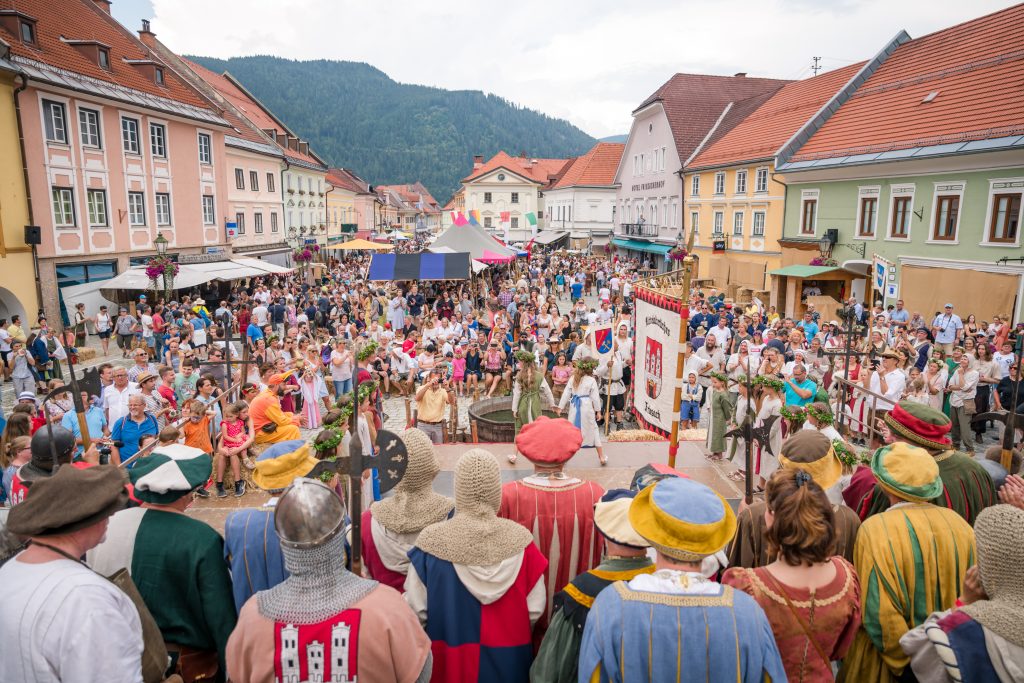
Spectaculum in Friesach
Every two years on the last weekend in July, Friesach, the oldest town in Carinthia, transforms itself into a medieval venue. Princes, knights, jugglers, musicians and fire-eaters come together to celebrate one of the most beautiful medieval festivals in Austria, the “Spectaculum zu Friesach“.
The streets of the old town are bustling with traders and market traders offering their medieval wares. In addition, jugglers and minstrels delight guests with fire shows, magic tricks, music and medieval dances. Heavily armed knights fight for the favor of the fair damsels, who show themselves in their most beautiful dresses, sewn according to medieval models. Food and drink are served in the old fashioned way and in the evening, when it gets dark, only torches and fire bowls light up the old walls of the town. A unique atmosphere that must be experienced.