
Exploring the soil of the Görtschitztal valley
Immerse yourself in the world of a miner and experience the atmosphere underground in the show tunnel. In addition to iron, colorful minerals have always been found, which are still on display today, and a detailed, loving doll exhibition recalls the stories and customs of the miners.
Stories and myths in Knappenberg “underground”
After the end of the mining era in Hüttenberg, a 900-metre-long show mine was built in the old Knappenberg mine tunnel dating back to 1567.
Here you can immerse yourself in the hard working world of the miners “underground”. How was the ore mined and transported out? How did fresh air get into the tunnels? In addition to the answers to these questions, you will also learn exciting stories, as many myths and legends surround the lives of the miners of Hüttenberg. Saint Barbara, the patron saint of miners, was the only female allowed in the mines in the past, as it was believed that women brought bad luck underground. The fact is that whole families worked together in the mines. The men in the mines, the women and children carried out work above ground such as cleaning, crushing and sorting ore, hauling and carrying work and operating reel elevators. For centuries, mining in the Hüttenberg area was a major employer and an economic factor for the entire region.
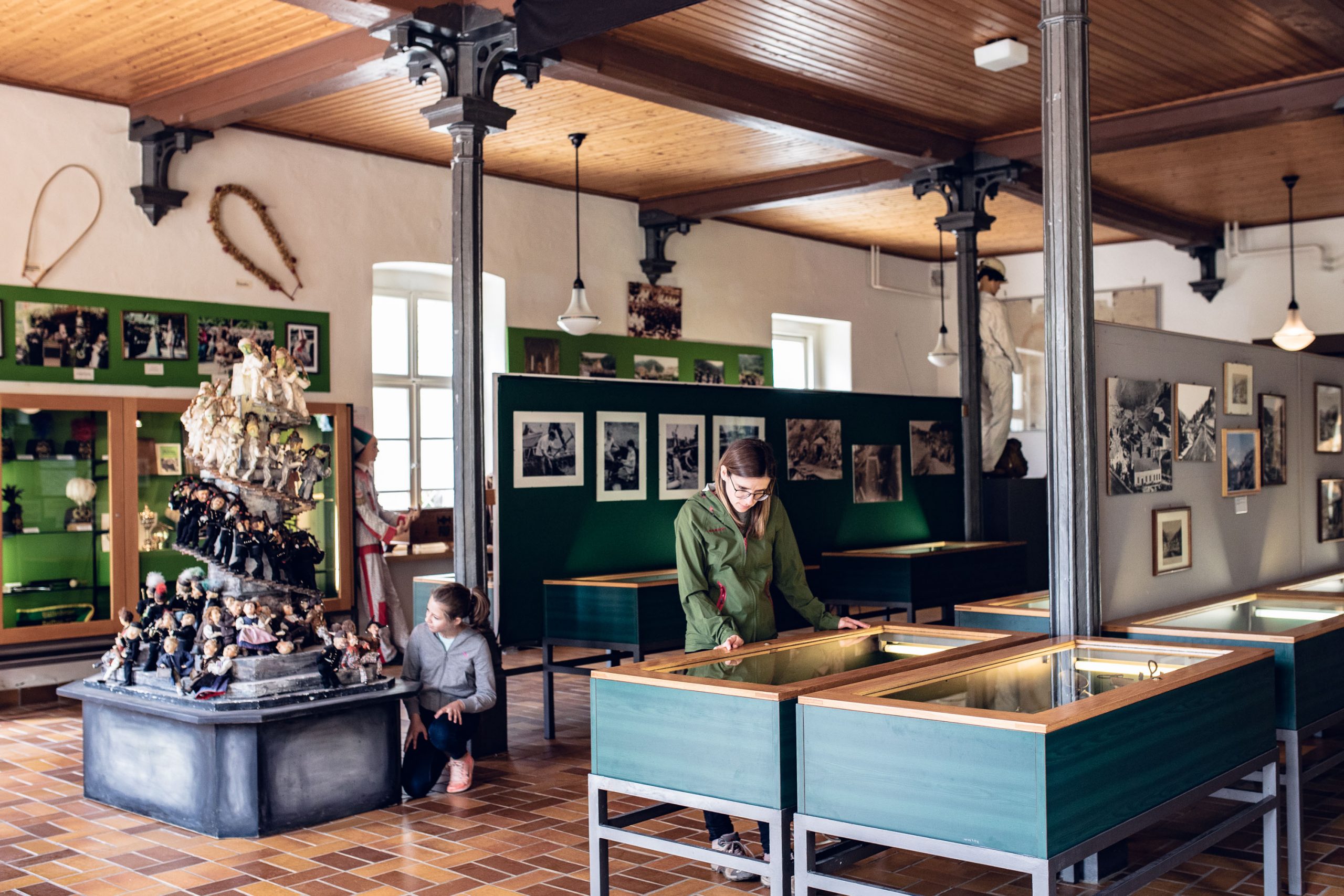
Mining museum, show mine and doll museum
At the same location in Knappenberg is the associated mining museum, the show mine and a mineral show with over 200 colorful minerals. As the third largest mineral site in the world and the largest in Europe, Hüttenberg is certainly worth a visit.
Opposite the show mine is the doll museum, where the handmade dolls of Helga Riedel from Klagenfurt recreate the history and customs of the village. On display are the Hüttenberg Reiftanz, a traditional miners’ festival celebrated every three years, as well as stories
Heft open-air museum: Monumental witness to the iron industry
Take a journey back in time to the iron industry of the 19th century and explore the gigantic Heft buildings in Hüttenberg: here you will want to turn back time and watch the hustle and bustle. The monumental buildings from the 19th century are among the largest historic ironworks in Europe.
For the Carinthian Provincial Exhibition held in 1995 under the motto “Grubenhunt und Ofensau”, the architect Günther Domenig designed a harmonious combination of the old building fabric with a floating glass and steel construction.
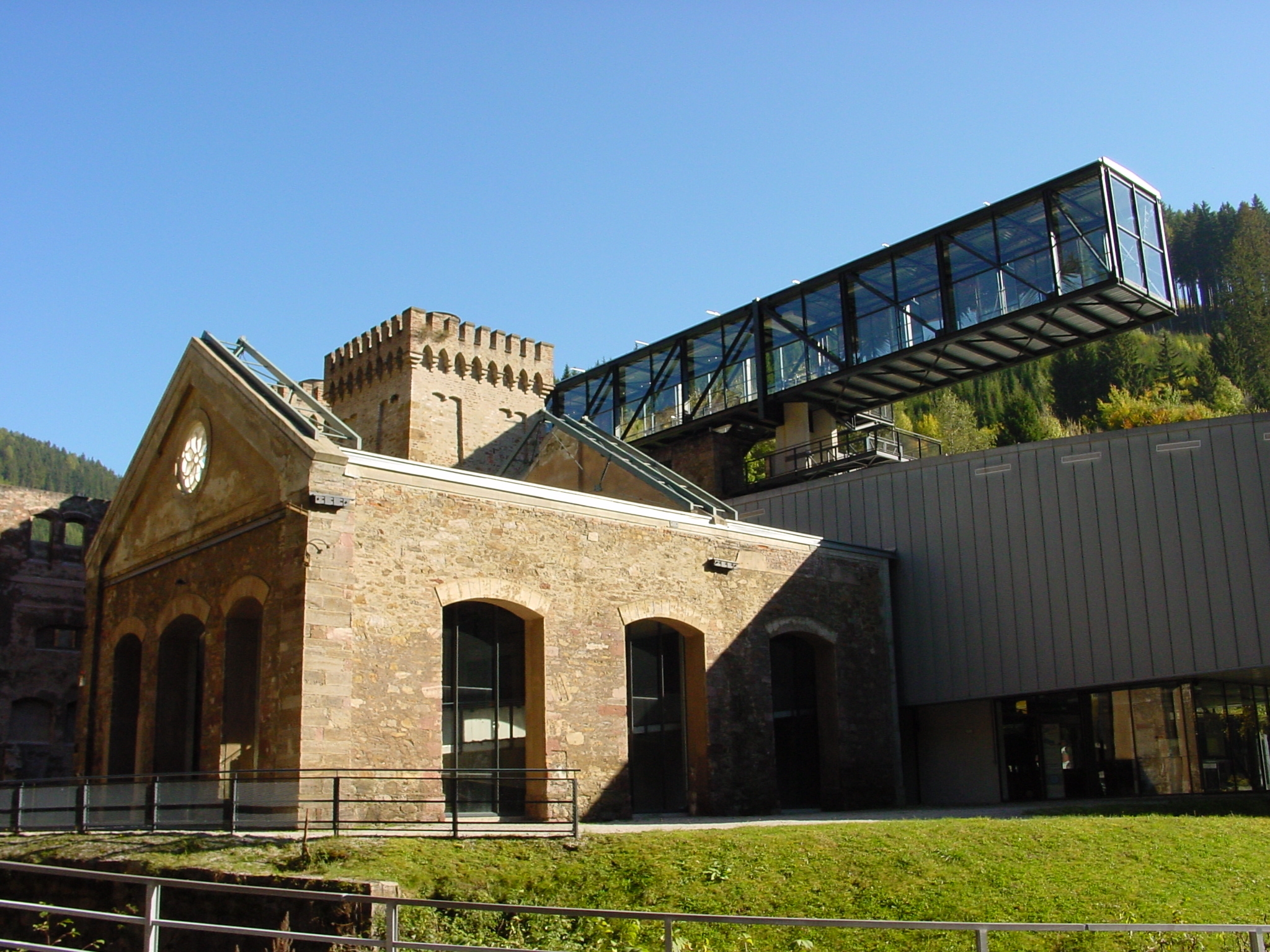
Today, the Heft can be visited as a museum. In addition to the imposing charcoal blast furnaces “Johann-Ernst” and “Pulcheria” in classicist style, other processing facilities can also be seen. The route of the old ore railroad, which transported the ore to the Heft for smelting, has been turned into a pleasant hiking trail and if you look closely, you can still see the remains of the old inclined elevator on the mountain, which was used to transport the ore down to the valley.
This video provides more impressions of the open-air museum in the magazine